
Can You Earn $1,000+ Renting Your Backyard? 6 Apps to Try
Turn unused outdoor space into extra income through dog visits, pool rentals, camping, events, or vehicle storage. Earnings depend on your property, location, demand, expenses, and platform fees.
 Reviewed by YaShiRo
Requirements
- Legal ownership or permission to rent the space
- Minimum host age: [verify by platform]
- Property located in a supported market
- Government identification or payout verification
- Bank account or another supported payout method
- Accurate photographs of the property
- Safe and clearly marked guest access
- Compliance with local zoning and permit rules
- HOA, landlord, or mortgage permission where applicable
- Appropriate property and liability insurance
- Tax information where required
How it works
What is backyard renting?
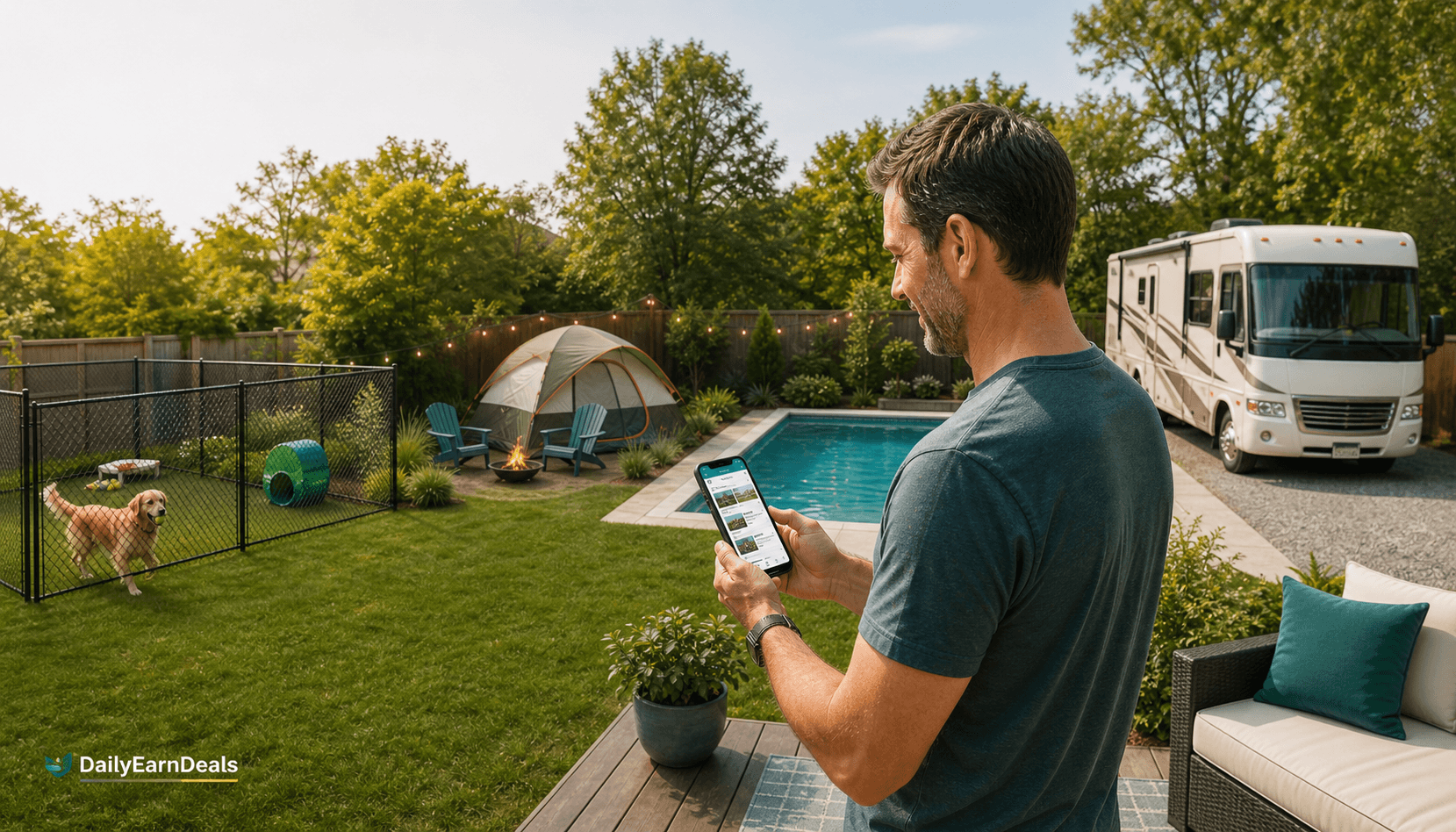
Backyard renting means allowing people to use part of your outdoor property for a specific purpose in exchange for payment.
You do not necessarily need a luxury garden or swimming pool. Depending on the platform, people may pay to use a fenced yard for their dog, park an RV, camp overnight, hold a small event, or use the property for photography.
The platforms handle listings, reservations, and payments. Most let you choose your price, availability, guest limits, and property rules.
However, this is not always passive income. You may need to answer messages, clean the space, inspect it for hazards, manage guests, and keep your availability updated.
How backyard renting works
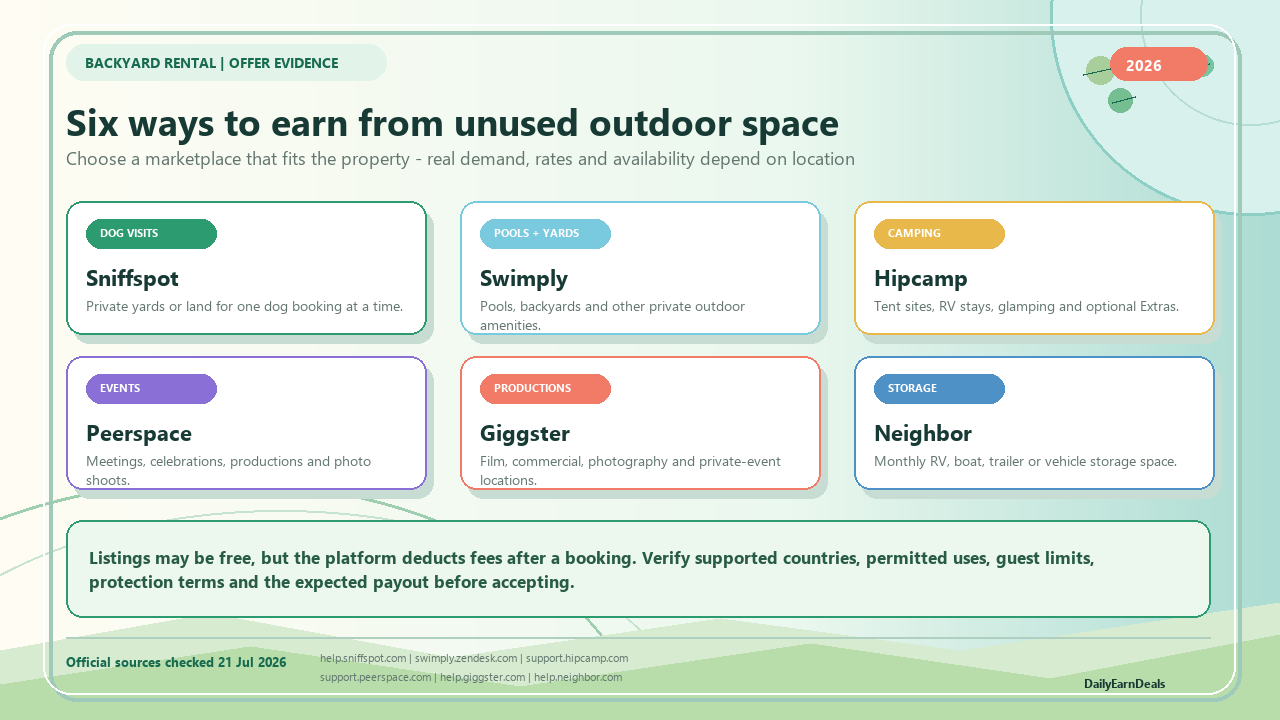
First, decide which platform matches your property:
- Sniffspot: Rent a private yard to dog owners by the hour.
- Swimply: Rent a pool, backyard, sports court, or similar space.
- Hipcamp: Offer land for tent camping, RV stays, or glamping.
- Peerspace: List attractive spaces for events, meetings, and photo shoots.
- Giggster: Host film productions, commercial shoots, and private events.
- Neighbor: Rent unused outdoor space for RV, boat, trailer, or vehicle storage.
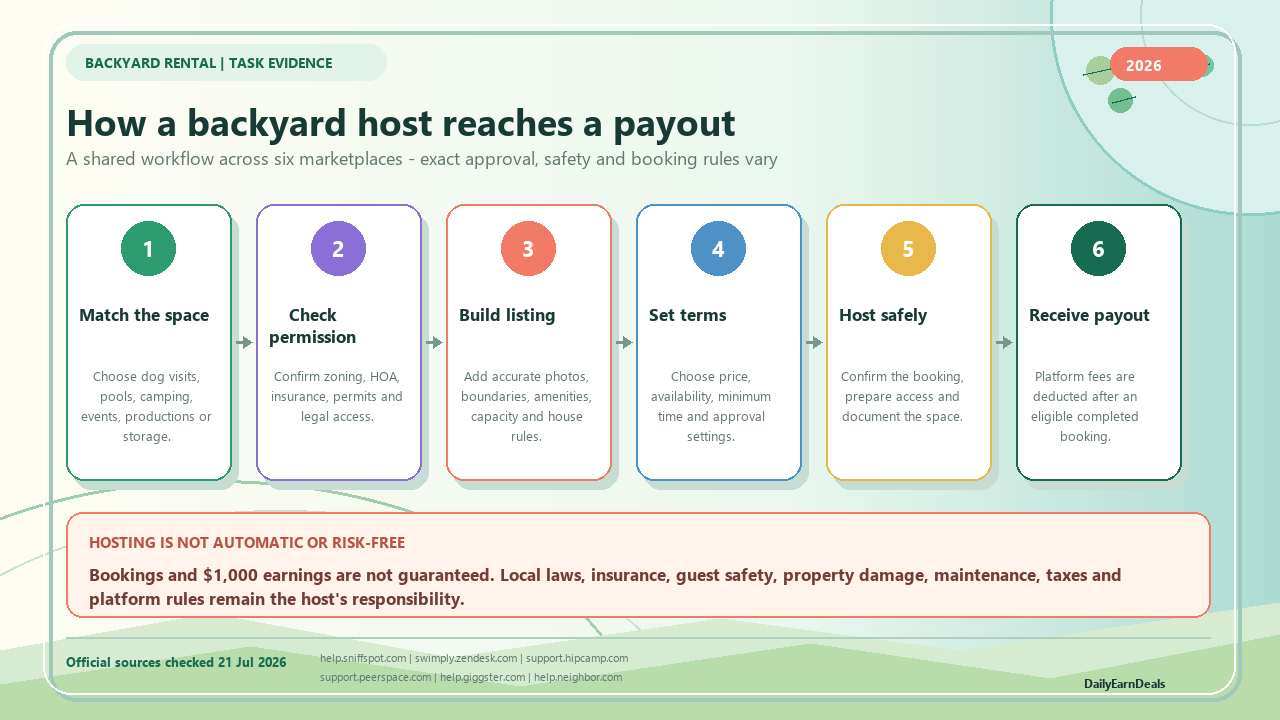
You create a listing with clear photographs, amenities, safety information, availability, rules, and a price. Interested guests send a request or make a reservation.
Some platforms let you approve every request manually. Others may offer automatic booking options.
Keep payments and important communication inside the platform. Accepting private payments can remove platform protection and make disputes more difficult to resolve.
How much can you really earn?
Earning $1,000 or more is possible, but it is not a standard or guaranteed result.
Your income depends on:
- Local demand
- The size and type of your space
- Privacy and security
- Available amenities
- Seasonal demand
- Your pricing
- Reviews and listing quality
- How frequently you accept reservations
- Platform fees
- Cleaning, maintenance, insurance, utility, and tax costs
A fenced yard near neighborhoods with many apartment residents may perform well on Sniffspot. A clean pool in a warm and populated area could attract Swimply bookings.
Land near a tourist attraction, national park, lake, or hiking area may have better potential on Hipcamp. Secure vehicle storage may provide more consistent monthly income through Neighbor.
Hipcamp publishes significant earnings figures for active hosts. However, those figures may include established properties with multiple campsites or premium accommodation. They should not be treated as typical backyard earnings.
Start with realistic expectations. Test local demand before spending money on major property improvements.
Payout
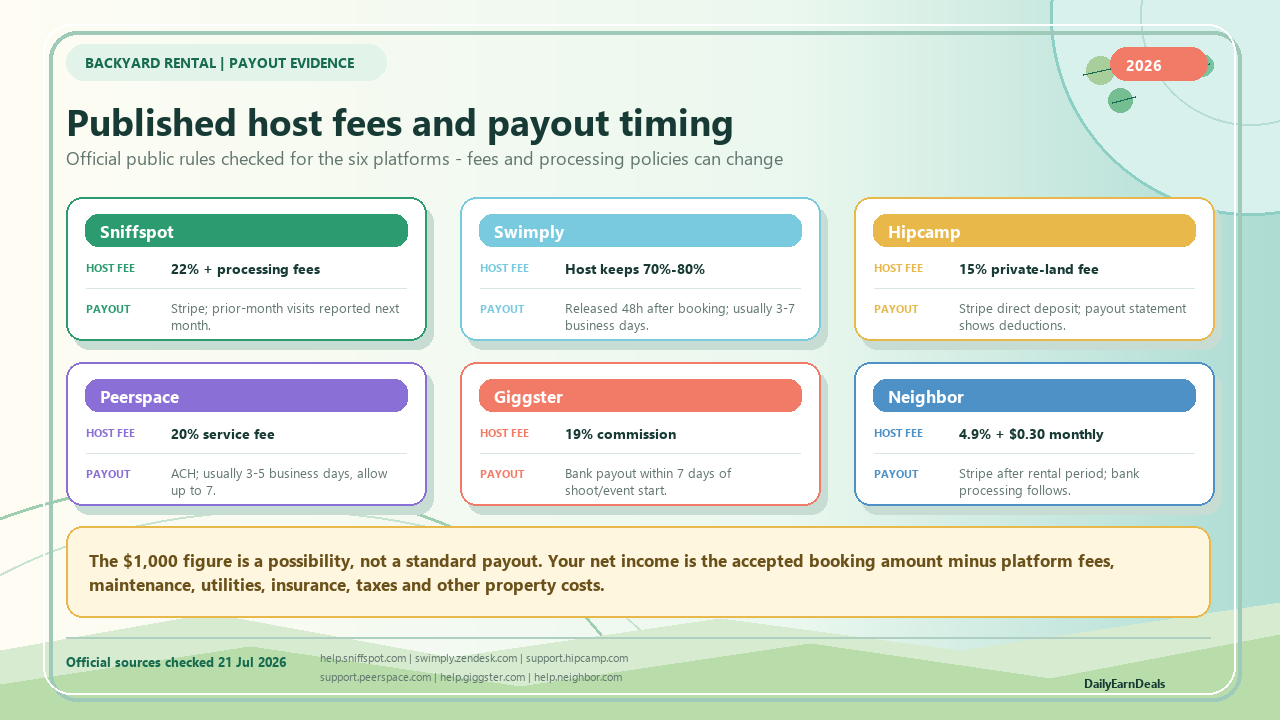
Each platform has different fees and payout schedules.
- Sniffspot charges a 22% platform fee plus applicable payment-processing fees. Host earnings are normally sent to Stripe during the following month.
- Swimply listings are free. The platform generally deducts a host commission ranging from 15% to 25% and sends the remaining payout after the completed booking.
- Hipcamp currently charges US private landowners a 15% commission. Host payments are processed through Stripe.
- Peerspace charges hosts a 20% service fee. Bank payouts are generally processed within three to five business days after an event, although processing can take up to seven days.
- Giggster deducts a 19% host commission. Payouts are normally processed within seven days of the reservation's start.
- Neighbor deducts 4.9% plus $0.30 from each monthly host payout. Funds are sent through Stripe at the end of the rental period.
Fees and policies can change. Always check the expected payout shown inside the platform before accepting a reservation.
Who it’s best for
Backyard renting may suit:
- Homeowners with unused outdoor space
- People comfortable allowing guests onto their property
- Owners of fenced yards, pools, gardens, or open land
- People with space for RVs, boats, trailers, or vehicles
- Hosts willing to maintain the area and answer guest questions
- Property owners who can follow local laws and insurance requirements
It may not suit people who need guaranteed monthly income, require complete privacy, or cannot safely separate the rental area from their home.
How to start
1. Identify the safest and most useful feature of your property.
2. Compare platforms supporting that type of space.
3. Check local zoning, permit, business, and HOA rules.
4. Contact your insurer and explain the planned rental activity.
5. Inspect the area and remove hazards.
6. Take bright and accurate photographs.
7. Create a listing with clear rules and guest limits.
8. Connect and verify your payout account.
9. Start with limited availability.
10. Review your expenses and earnings after the first bookings.
Tips to earn more
- Show the entire space clearly in your photographs.
- Explain parking, access, boundaries, and restricted areas.
- Respond to booking questions quickly.
- Keep your calendar accurate.
- Compare your price with similar local listings.
- Keep communication and payments inside the platform.
- Inspect the property before and after every booking.
- Ask satisfied guests to leave an honest review.
- Track cleaning, maintenance, utility, and insurance costs.
- Avoid accepting bookings that exceed the safe capacity of your property.
Pros & cons
Pros
- Turns unused outdoor space into potential income
- Hosts usually control pricing and availability
- Several property rental types are available
- Most platforms have no upfront listing fee
- Bookings and payments are managed through the platform
Cons
- Bookings and earnings are not guaranteed
- Platform fees reduce the final payout
- Guests may create noise, damage, or privacy concerns
- Insurance, tax, zoning, or HOA restrictions may apply
- Cleaning and property maintenance may be required
Our verdict
Backyard renting can provide useful side income for owners with safe, practical space and local demand. Start small, verify the rules, and calculate your real earnings after fees and expenses.
Frequently asked questions
Q: Is renting out your backyard legitimate?
A: Yes. Platforms such as Sniffspot, Swimply, Hipcamp, Peerspace, Giggster, and Neighbor operate marketplaces for different types of property rentals.
Q: Can you really earn $1,000 a month?
A: It is possible for suitable properties in high-demand locations, but it is not guaranteed. New or occasional hosts may earn considerably less.
Q: Which app is best for renting a backyard?
A: Sniffspot suits private dog yards, Swimply suits pools, Hipcamp suits camping land, Peerspace and Giggster suit events or productions, and Neighbor suits vehicle or equipment storage.
Q: Do you need a swimming pool?
A: No. Fenced yards, gardens, open land, driveways, and secure storage spaces may also qualify.
Q: How do backyard rental hosts get paid?
A: Most platforms send payouts through Stripe or direct bank deposit after deducting their service and processing fees.
Q: Are backyard rental listings free?
A: The platforms covered here generally allow hosts to create listings without an upfront fee. They deduct a commission after a paid booking.
Q: Is renting out a backyard legal?
A: It depends on local zoning, permits, HOA rules, property agreements, and the intended activity. Check the rules before accepting guests.
Q: Does homeowners insurance cover backyard rentals?
A: Not always. Platform protection may have exclusions and should not automatically be treated as a replacement for personal insurance.
Q: Is backyard rental income taxable?
A: It may be. Keep records of payouts and expenses, and consult a qualified tax professional for advice relevant to your location.
Disclosure: some links on this page are affiliate or referral links — we may earn a commission at no extra cost to you. Rewards and eligibility are set by the offer provider and can change. Always check the provider's current terms before joining. See our affiliate disclosure.
Report this offer as expired or wrong
Similar offers

MobileXpression Review 2026: Rewards, Privacy and Risks
MobileXpression rewards selected mobile users for keeping its research software active, but participation involves extensive browsing and app-usage data collection.

iPhone vs Android for Earning Apps: Which Phone Should You Use?
Both iPhone and Android can work well for online earning apps. The better choice depends less on the phone itself and more on app availability, safety, your country, and the type of earning apps you use.
Sidedoor Review: Find Job Referrals Through Your Network for Free
Sidedoor by Happenstance lets job seekers paste a vacancy and look for people in their extended network who may provide an introduction or referral. It is free to use, but it is a career tool rather than a cash-reward offer.
Comments(0)
Comments come from visitors using self-chosen display names — they are not verified accounts and don't represent DailyEarnDeals. Every comment is reviewed by a person before it appears.